Miles Apart, Still a Family: Coordinating Alzheimer's Care Across State Lines
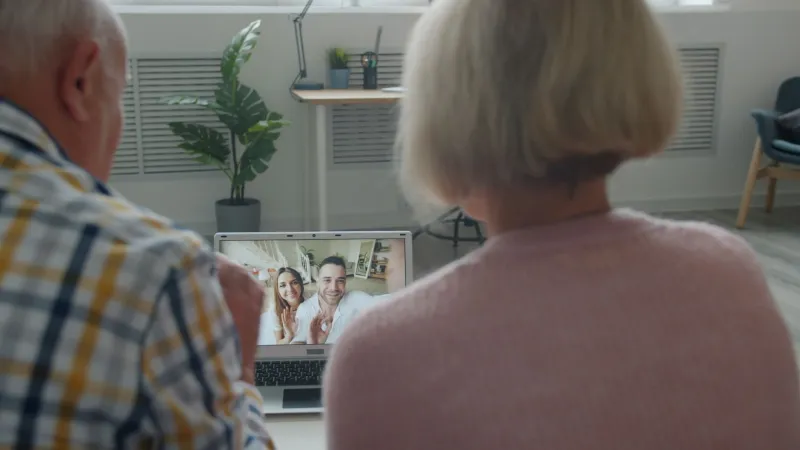
Alzheimer's disease does not pause to account for geography. When a parent receives a diagnosis, adult children may be scattered across the country — one in Seattle, another in Atlanta, a third in Ohio — each carrying the weight of love and obligation from hundreds of miles away. The sibling who lives closest often absorbs the most visible responsibilities, while those at a distance struggle with guilt, helplessness, and the persistent feeling that they are not doing enough. Neither experience is sustainable without structure.
Coordinating care across state lines is one of the most complex logistical and emotional challenges a family can face during an Alzheimer's journey. But with intentional planning, honest conversation, and the right tools, it is possible to build a caregiving system that distributes responsibility fairly — even when the zip codes are anything but equal.
Acknowledging the Imbalance Before It Becomes Resentment
The first and most important conversation a family can have is an honest one about proximity and its consequences. The sibling who lives nearby will inevitably handle more day-to-day tasks: accompanying a parent to medical appointments, responding to unexpected crises, managing household concerns. This is not a moral failing on anyone's part — it is simply the reality of geography.
Problems arise when that imbalance goes unnamed. The local sibling begins to feel unseen and overwhelmed. The distant siblings, sensing tension but unclear about how to help, may withdraw further. Resentment accumulates quietly until a single difficult moment causes it to surface — often at the worst possible time.
Families who navigate this well tend to name the imbalance early and deliberately. Acknowledging that one person is carrying a heavier physical burden is not an accusation; it is the foundation for building something more equitable. From that acknowledgment, families can begin to think creatively about how distant siblings can contribute in meaningful, concrete ways.
Dividing Responsibilities by Skill and Access, Not Just Location
Geography determines who can show up in person, but it does not determine who contributes most. Long-distance siblings can take ownership of tasks that do not require physical presence — and doing so with genuine accountability transforms them from passive observers into active members of the caregiving team.
Consider assigning financial management to a sibling with a background in accounting or a willingness to learn. Insurance coordination, Medicare or Medicaid correspondence, and bill payment are time-consuming tasks that can be handled entirely remotely. Similarly, researching in-home care agencies, memory care facilities, or adult day programs is work that requires hours of phone calls and online research — effort that a distant sibling can absorb completely, freeing the local caregiver to focus on direct support.
Other responsibilities that travel well across state lines include: scheduling and attending telehealth appointments on behalf of the family, managing a shared family calendar, maintaining communication with the parent's medical team via patient portal messaging, and coordinating prescription refills or medical supply deliveries. These contributions may be invisible in the day-to-day, but they are genuinely load-bearing.
Building a Communication Infrastructure That Actually Works
Without a reliable communication system, even the most well-intentioned families can find themselves repeating information, missing critical updates, or making decisions in silos. Establishing a shared infrastructure early — before a crisis demands it — is one of the most practical investments a family can make.
A shared digital platform, such as a private group in a messaging application or a dedicated caregiving coordination app like CareZone or Lotsa Helping Hands, gives every family member access to the same information in real time. Medication logs, appointment summaries, behavioral observations, and care notes can all live in one place, visible to anyone with access. This reduces the burden on the local sibling to serve as the family's sole information conduit.
Regular family calls or video check-ins — weekly or biweekly, with a standing agenda — create a structured space for updates, decisions, and emotional processing. Without a scheduled touchpoint, communication tends to happen reactively, which means it often happens in moments of stress. A calm, routine check-in allows the family to address concerns before they escalate.
It is also worth designating a single point of contact for the parent's medical team. When multiple family members call physicians, specialists, and care managers with overlapping questions, it creates confusion and can strain professional relationships. One sibling — typically the local caregiver or whoever has medical power of attorney — should serve as the primary liaison, with others receiving updates through the family's shared system.
Planning In-Person Visits Strategically
For distant siblings, visits home are emotionally significant — but they are also an opportunity to provide the local caregiver with something irreplaceable: a genuine break. Rather than planning visits around holidays, when the household is already at full capacity, consider scheduling them during ordinary periods when the local sibling most needs relief.
A two-week visit from a distant sibling can allow the local caregiver to take a vacation, attend to their own medical appointments, or simply sleep without one ear open. This kind of intentional respite is more valuable than a holiday gathering where everyone is present but no one is truly resting.
Discuss in advance what the visiting sibling will take over during their stay. Cooking, overnight supervision, medication management, and transportation to appointments are all tasks that can transfer temporarily. The goal is not for the distant sibling to observe — it is for them to carry the full weight of caregiving for a defined period, giving the local sibling a true exhale.
For families where financial resources allow, coordinating visits around major medical appointments or care transitions can also be valuable. Having multiple family members present when a physician delivers a significant update, or when a parent is moving to a new level of care, ensures that decisions are made collectively and that no one sibling bears that weight alone.
When Distance Becomes a Source of Grief
It would be incomplete to discuss long-distance caregiving without acknowledging its emotional cost. Siblings who live far from a parent with Alzheimer's often describe a particular kind of grief: the experience of visiting and finding their parent meaningfully changed, of missing the gradual transitions that the local sibling witnesses day by day.
This grief is real, and it deserves space. Distant caregivers may feel that they are losing their parent in sudden, disorienting increments rather than the slow, continuous way that proximity allows. They may also carry guilt that no amount of remote contribution fully resolves.
If your family has access to a social worker, therapist, or Alzheimer's support group — many of which now meet virtually through organizations like the Alzheimer's Association — these resources can be particularly valuable for siblings navigating the emotional complexity of long-distance caregiving. You do not have to be in the same room as your parent to grieve. And you do not have to grieve alone.
The Family You Build Around the Distance
Alzheimer's has a way of revealing the architecture of a family — its fault lines, its strengths, and its capacity for adaptation. Families who coordinate care across state lines successfully are not those without conflict or logistical challenge. They are those who choose, repeatedly, to treat distance as a problem to be solved rather than an excuse to disengage.
The miles between siblings do not have to become the miles between caregivers. With honest conversation, deliberate structure, and a genuine commitment to sharing the load, families can remain exactly that — a family — no matter how far apart they live.